
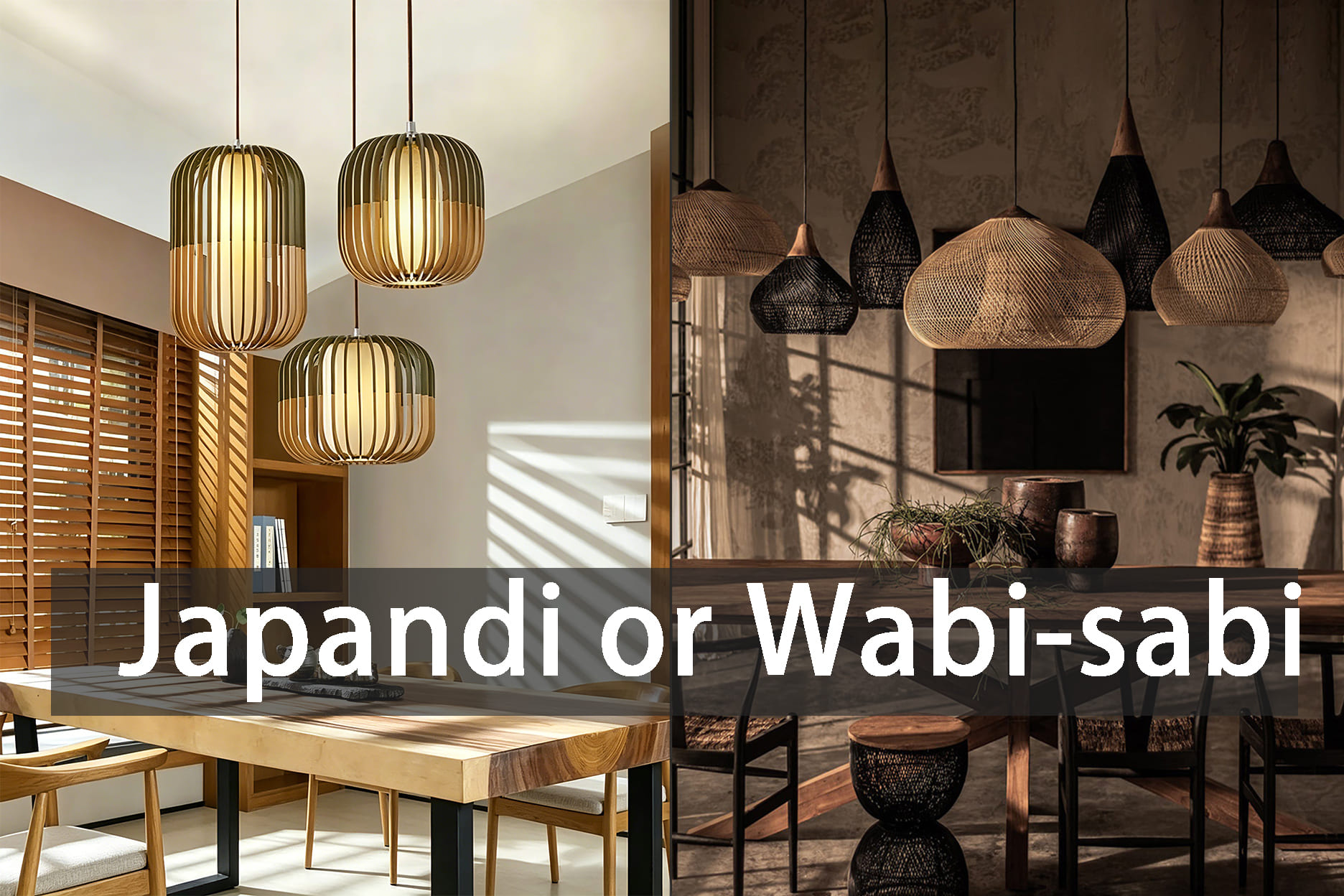
In the world of interior design, two philosophies have captured the hearts of those seeking peace amidst the chaos of modern life: Japandi and Wabi-sabi. While both find their roots in Japanese aesthetics and a love for nature, they tell very different stories through light and shadow.
If you are looking to transform your sanctuary with a handmade rattan pendant light, understanding these nuances is the key to choosing the piece that truly speaks to your soul.
1. Japandi: The Elegance of Order
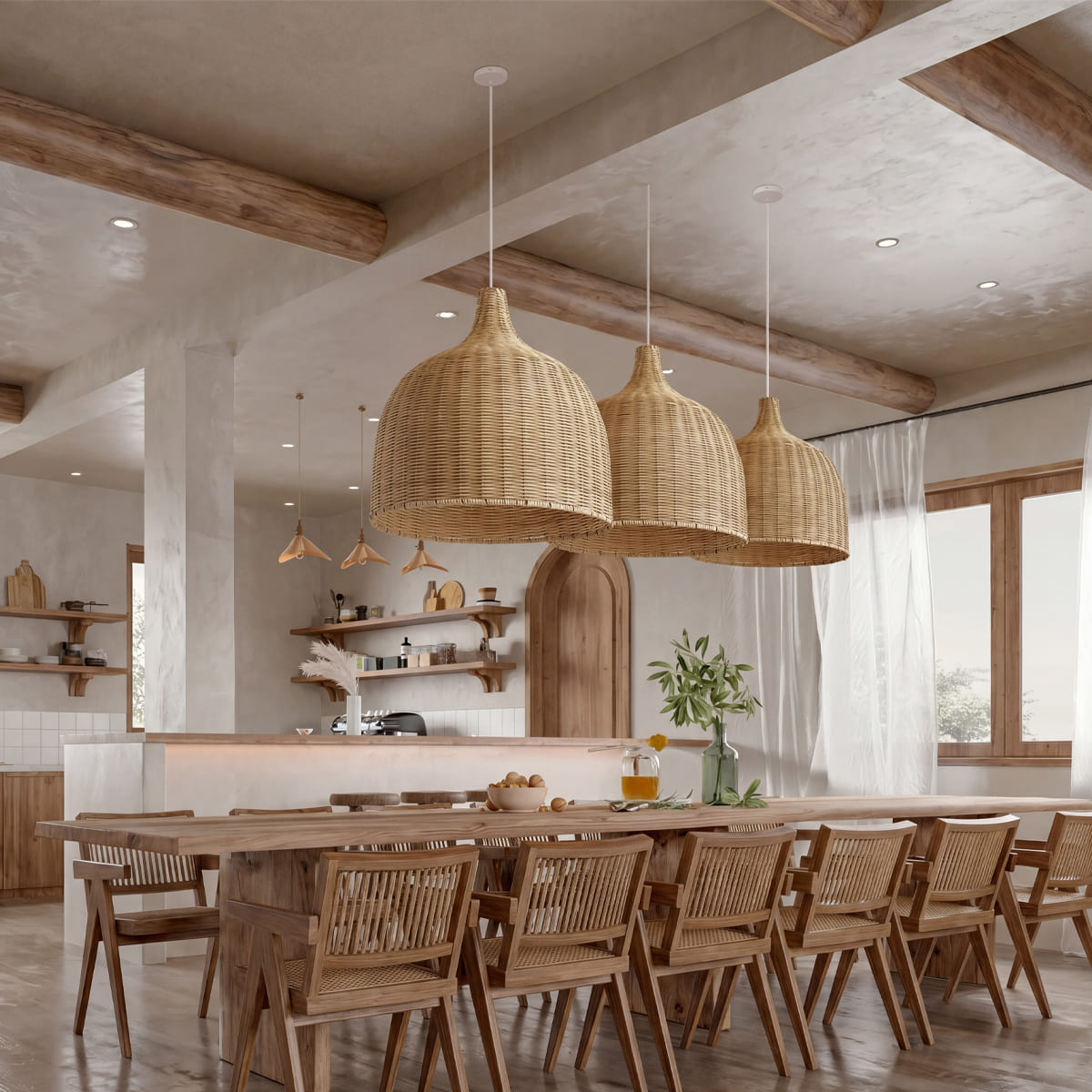
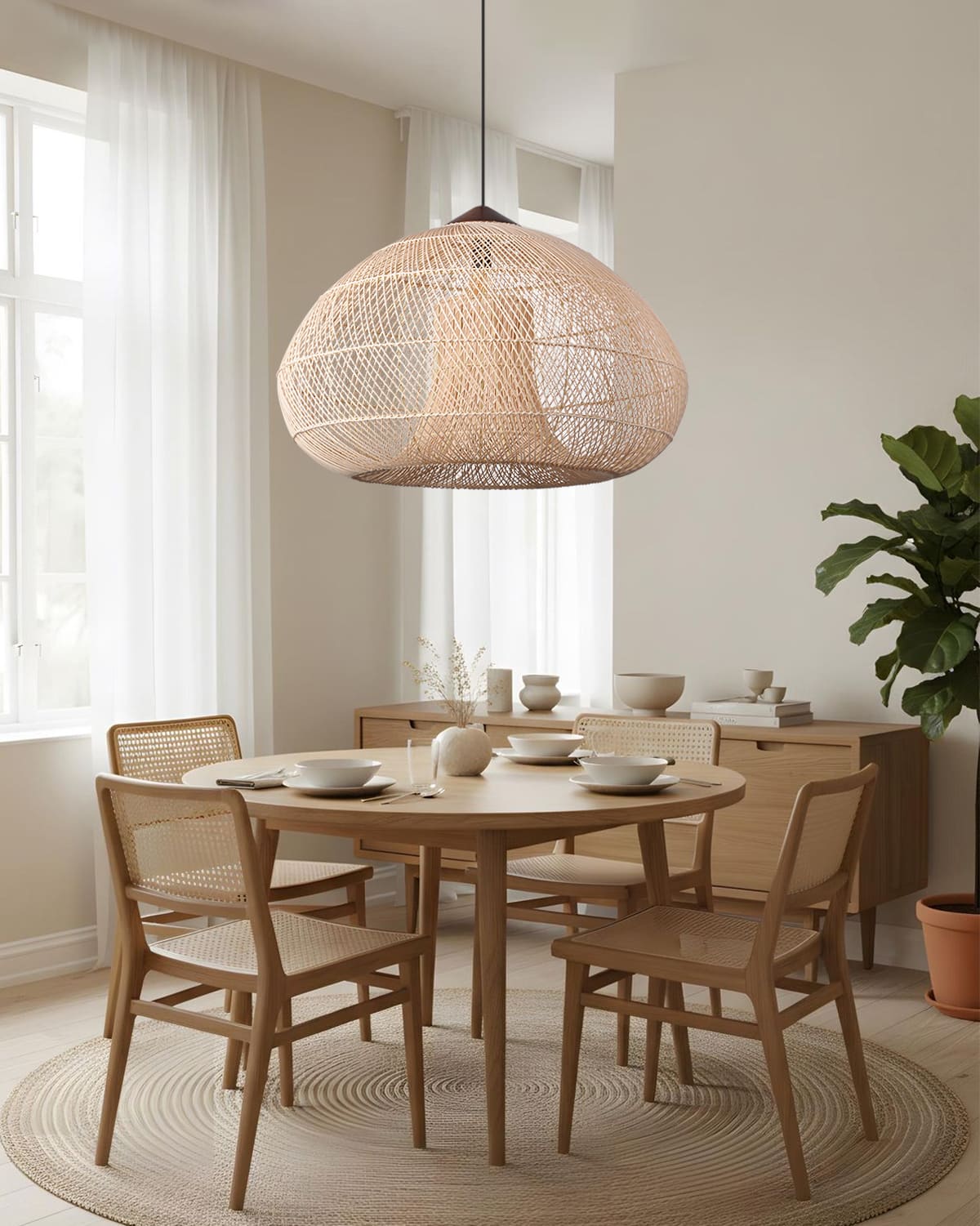
Japandi is the beautiful marriage of Japanese minimalism and Scandinavian functionality. It’s for the person who loves a home that feels clean, organized, but never cold.
-
The Vibe: Bright, airy, and curated.
-
The Palette: Soft neutrals, light oaks, and subtle black accents for contrast.
-
The Lighting Choice: In a Japandi space, a rattan lamp should be a statement of craftsmanship. Look for geometric symmetry and fine, tight weaves. A large dome-shaped rattan light over a light oak dining table creates a focal point that is both functional and architecturally stunning.
Styling Tip: Pair a smooth-textured rattan pendant with white linen curtains to maximize the "Scandi-cool" brightness.
2. Wabi-sabi: The Soul of Imperfection
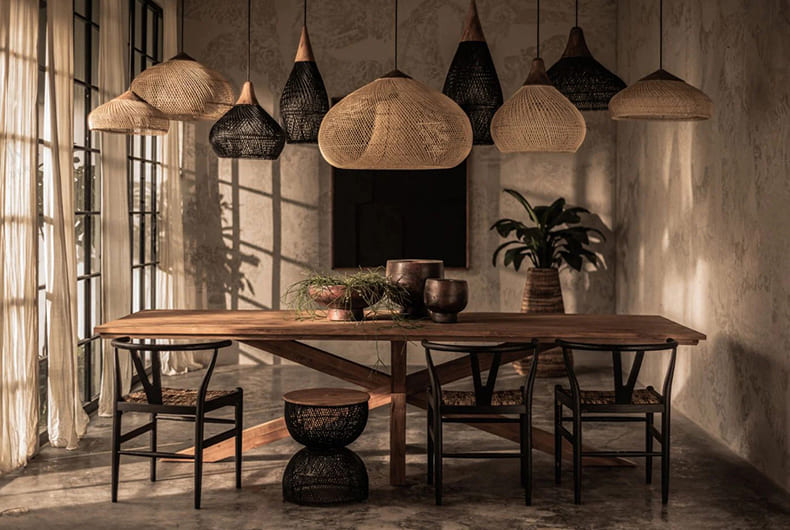
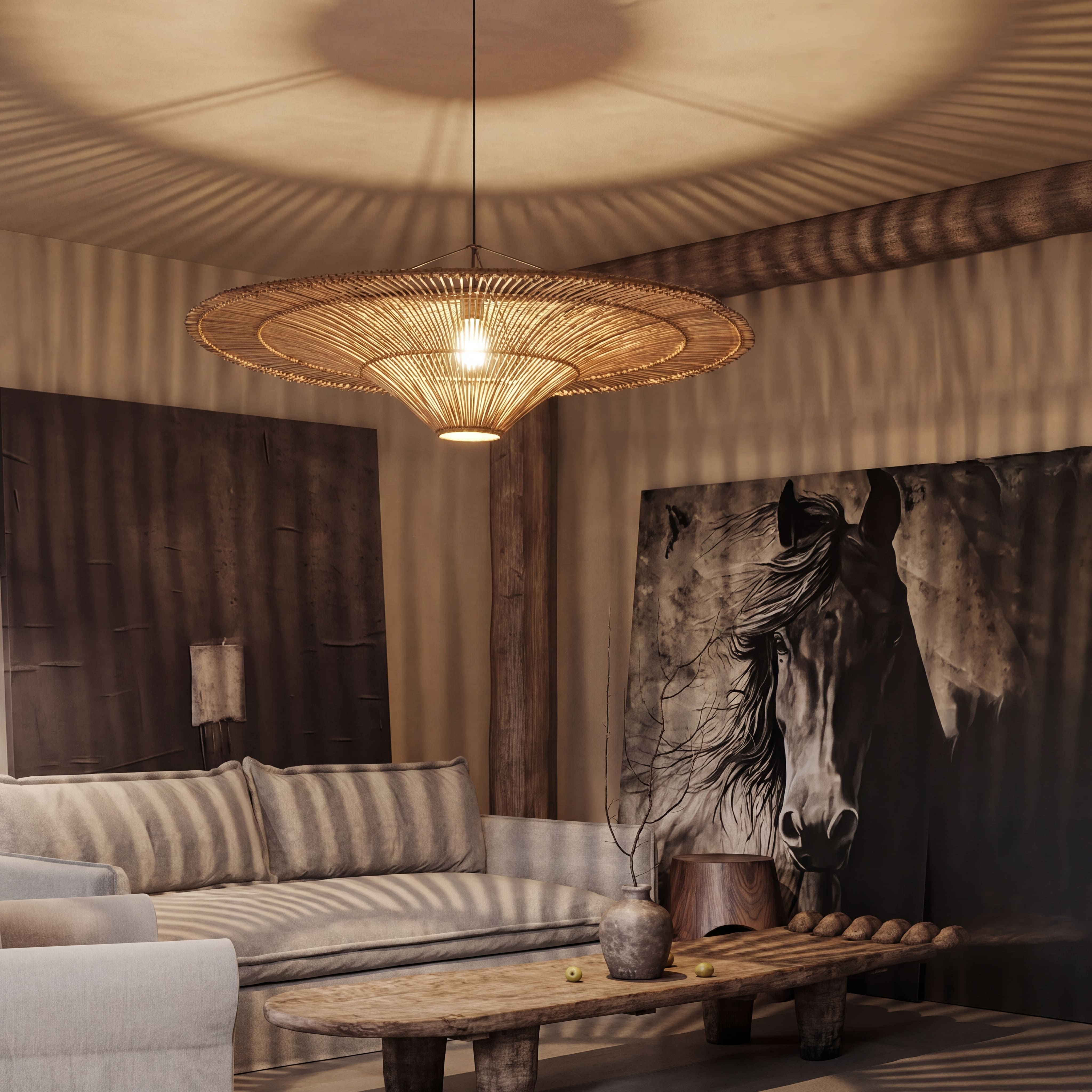
Unlike the polished look of Japandi, Wabi-sabi finds beauty in things that are weathered, raw, and authentic. It’s an ancient philosophy that embraces the cycle of growth and decay.
-
The Vibe: Earthy, moody, and profoundly quiet.
-
The Palette: Charcoal, clay tones, and deep forest greens.
-
The Lighting Choice: Wabi-sabi lighting is all about texture and shadows. A pendant light with an irregular, organic shape or a coarser weave is perfect. Here, the "imperfections" of handmade rattan—the natural color variations and the artisan’s touch—are celebrated features, not flaws.
Styling Tip: Use a low-hanging rattan lamp in a corner with lime-wash walls. Let the intricate shadow patterns (Komorebi) dance on the rough surfaces to create a meditative retreat.
3. At a Glance: Which One Are You?
| Feature | Japandi | Wabi-sabi |
| Mood | Healing & Uplifting | Silent & Grounded |
| Visuals | Clean lines & Symmetry | Raw textures & Asymmetry |
| Material Finish | Refined, light-toned rattan | Natural, aged, or dark-stained rattan |
| Light Effect | Soft, diffused glow | Dramatic, dappled shadows |
4. Why Rattan is the Bridge Between Both
Whether you lean towards the refined grace of Japandi or the rustic depth of Wabi-sabi, natural rattan is the ultimate medium. As a sustainable, hand-woven fiber, it brings a "living" element into your home that metal or plastic simply cannot replicate.
At Lighting Forest, our pendant lights are handcrafted to preserve these natural narratives. Each piece is unique, designed to age gracefully alongside your home.
Conclusion: Let Your Light Tell Your Story
Choosing between Japandi and Wabi-sabi isn't about following rules—it’s about how you want to feel when you flip the switch at the end of the day. Do you crave the refreshing clarity of a Japandi morning, or the soulful stillness of a Wabi-sabi evening?
[Explore Our Handcrafted Rattan Collection] and find the light that brings your vision to life.